We’ve mentioned the name Eric Corne on these pages quite a bit in recent years, with Corne having produced many of the latest recordings from blues masters John Mayall and Walter Trout. The founder and president of Forty Below Records, Corne has also recorded artists such as Joe Walsh, Edgar Winter, Lucinda Williams, Nancy Wilson, Joe Bonamassa, Guitar Shorty, Coco Montoya, and Karen Lovely, among others, through the years, but also happens to be a pretty darn good songwriter and musician himself, as demonstrated on his new album Happy Songs for the Apocalypse (Forty Below Records).
Here’s a song from the album we thought you might like, what Corne’s press materials describe as an “alt blues rocker” that features Walter Trout on guitar along with some gritty harmonica from Corne.
That’s definitely one of the more rocking numbers you’ll hear on the album, along with a “Pull String to Inflate” that features Mavis Staples guitarist Rick Holmstrom, with most of the other tracks being, as the recording’s title suggests, more of a breezy or swaying variety, frequently accompanied by lyrics reflecting on the current state of the world, with alternative pop, folk, rock, and other Americana sounds that range from The Beatles, David Bowie, Elvis Costello, and Tom Petty to Trigger Hippy, Son Volt, and The Lumineers, thanks to an impressive assortment of guest musicians and instruments that include pedal steel, dobro, dulceola, violin, slide guitar, Wurlitzer, Hammond organ, theremin, accordion, pump organ, tack piano, omnichord, euphonium, and flugel horn, among others, with Corne himself providing lead and harmony vocals, acoustic guitar, electric guitar, bass, harmonica, percussion, whistling, and ukelele at various times.
It’s a terrific album, but if you’ve got limited time to check it out, we suggest you start with tracks like the bubblegummy slide guitar-, horns-, harmonica- and cowbell-laced “Locomotion”; the falsetto-vocaled ballad “The Gilded Age”; the swaying, violin-accented “The Distance You Run”; and the closing, almost-solo ukelele number “Sing, Little Darlin’ Sing” that also includes laughter and talking from Corne’s young daughter Lilly Rae for a nice sampling of what Corne has to offer before you dive into the album in its entirety.
This is one of those recordings that continues to grow on you with each listen, so do yourself a favor and don’t wait for the apocalypse to draw nearer before you pick up a copy.

 With each person having already distinguished himself as an individual performer, sideman, or member of such accomplished blues bands as The Fabulous Thunderbirds, Ronnie Earl & the Broadcasters, The Mannish Boys, and Sugar Ray & the Bluetones, it should come as no surprise that the new soul-blues-rock supergroup The Proven Ones can make some great music together. But what may surprise you is just how great the music on the band’s debut album Wild Again (Roseleaf Records) is, with the recording quickly becoming one of our favorites of 2018.
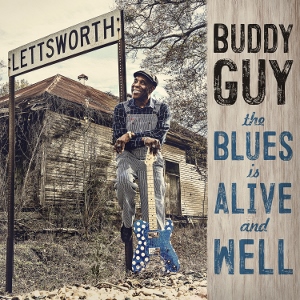 Sometimes reflective, like on the slow, brooding opener “A Few Good Years”, the “Catfish Blues”-ish “Somebody Up There”, and the swaying, horn-drenched “End of the Line”; sometimes fun, like on a “Cognac” that also features guitarists Keith Richards and Jeff Beck to make for a smooth, slow-burning blues party of sorts on which Guy remembers another good friend with the lyrics “If the late Muddy Waters was here drinking with us, that bottle would be ten times gone”, then interjecting “can’t drink with me no more, Muddy, but I, I got Keith Richards”, and a Sly & the Family Stone-like “Whiskey for Sale” that’s, as Buddy likes to say, “so funky, you can smell it” (or, in this case, taste it) with backing vocals from the McCrary Sisters and Hambridge’s daughter Rachel, slide guitar, B3 and clavinet, with Guy at the end asking “Don’t that make ya’ feel good now?” (it sure does, Buddy, thanks); and sometimes just straight-up blues, like on the scorching cover of Sonny Boy Williamson’s “Nine Below Zero”, the shuffling, partly falsetto-chorused “Guilty as Charged”, and a cautionary “Bad Day”, the album is everything you’d hope for from the soon-to-be-82-year-old Guy, showing that he’s still got his stuff both instrumentally and vocally, from the hard, biting blues for which we’ve long admired him (check out, for example, “Old Fashioned”, another number that incorporates some nice playing from the Muscle Shoals Horns) to slower-tempoed collaborations with the likes of longtime friend Mick Jagger (who contributes harmonica and a single “yeah” on the creeping “You Did the Crime”) and UK singer James Bay (who joins Buddy on both guitar and vocals for “Blue No More”).
 But it’s clear that Danielle hasn’t just pushed those days to the past, calling upon former Trampled Under Foot producer Tony Braunagel (Taj Mahal, Bonnie Raitt, Eric Burdon) to co-write a handful of songs (including the swaying, soulful title track), play drums on, and produce Cry No More, as well as guitarist brother Nick Schnebelen for the opening number “Crawl”, a powerful, rocking song on which Danielle — who, in 2014, became the first female winner of the Blues Music Award for Best Instrumentalist-Bass — immediately
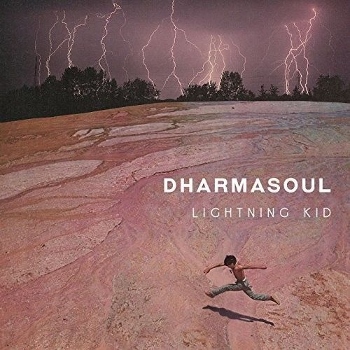 Here’s one to help take you into the weekend from a new, New Jersey-based duo that goes by the name of Dharmasoul. Featuring Jonah Tolchin on guitar and Kevin Clifford on drums (with the two trading off on lead and backup vocals), Dharmasoul makes an awfully strong name for itself with its debut album Lightning Kid (Dharmasoul Records).
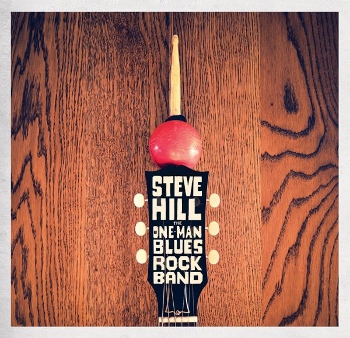 Recorded during a performance in Quebec last fall, the album is a raw, mostly rocking affair that nicely showcases Hill’s gruff, gritty vocals, often stinging guitar, and driving drums and other percussion that Hill plays with his feet and a drumstick attached to the head of his guitar, also adding harmonica on several numbers.
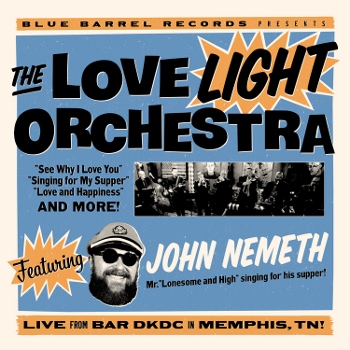 Here’s one we’ve been meaning to tell you about for a while now, a soulful, swinging recording that harkens back to the Memphis big band sound of B.B. King and Bobby “Blue” Bland, with the band, in fact, taking their name from one of Bland’s biggest hits in “Turn on Your Love Light”. Made up of musicians who have toured and played with Bland, The Bo-Keys, Gregg Allman, Solomon Burke, Robert Cray and others, The Love Light Orchestra also features the talented John Nemeth on vocals; together, they make one hell of a first impression on their debut album The Love Light Orchestra featuring John Nemeth: Live from Bar DKDC in Memphis, TN! (Blue Barrel Records), twelve tracks of soulful, horn-driven blues that range from the swaying style of Percy Mayfield’s “Please Send Me Someone to Love” and a quiet, jazzy take on Buddy Ace’s “This Little Love of Mine” to the partly falsetto croons of Freddie King’s “What About Love” and the closing, shuffling R&B adaptation of Al Green’s “Love and Happiness”.