
Recently, we told you about a rising young Massachusetts guitarist named Seth Rosenbloom. Tyler Morris is another, even younger guy from the same neck of the woods, but with a bit heavier of a style, as you can hear on his just-released third album Next in Line (VizzTone Records). At just 19 years old, Morris’ music has already been featured or reviewed in the pages of Guitar Player and Vintage Guitar magazines, and this slow-dragging, hard-rocking track (with strong vocals from Morten Fredheim) from Next in Line shows just why!
Among the other highlights from the album — which was produced by longtime Johnny Winter guitarist/band leader/producer Paul Nelson — are a terrific cover of Bill Carter’s “Willie the Wimp” (Stevie Ray Vaughan) that features blues singer and guitarist Joe Louis Walker on vocals and the catchy instrumental “Choppin'” on which the band is joined by the Uptown Horns (and Morris’ guitar sounds a lot like Walker’s). Check this guy out today!
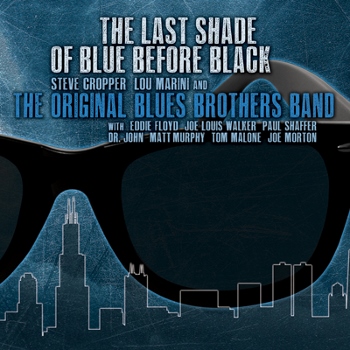 A mostly live studio recording that captures everyone playing together (on largely first or second takes), The Last Shade of Blue Before Black (Severn Records) offers a variety of horn-filled tracks in the tradition of the Blues Brothers, including solid and timeless renditions of such blues classics as Jimmy Reed’s “Baby, What You Want Me to Do”, “I Got My Mojo Working” (Muddy Waters), and Willie Dixon’s “Don’t Go No Further” mixed with the modern sound and lyrics of songs like the swaying “21st Century Baby” (“she’s always bringing me the blues”) written and sung by Rob “The Honeydripper” Paparozzi, soul numbers like Dan Penn, Rick Hall and Oscar Franks’ “You Left the Water Running” and Floyd and Cropper’s “On a Saturday Night”, and funky tracks like “Itch and Scratch”, Floyd’s “Don’t Forget About James Brown”, and Brown’s “Sex Machine”, the latter song featuring Shaffer on vocals and piano.
 So we were of course pleased to learn about the release of International Blues Challenge #33, a collection featuring finalists from the 2017 competition that, like the inaugural edition, does an excellent job of showing that the blues is still very much alive and well and in many diverse forms.
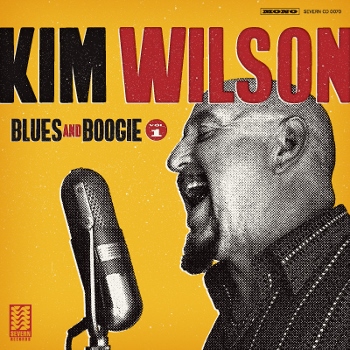 From the seducing sway of songs like “You Upset My Mind” (Jimmy Reed), “Same Old Blues” (Magic Sam) and “Sho Nuff I Do” (Elmore James), to swinging instrumentals like “Edgier”, “Teenage Beat” (Little Walter) and the opening “Bonus Boogie”, and breezy numbers like “From the Bottom” (Sonny Boy Williamson II) and the Sugar Ray & the Bluetones-style, horns-accented “No Love in My Heart” (Elmore James), everything here is, well, fabulous. But the tracks that stand out perhaps the most are a tough, lively “Ninety Nine” (Sonny Boy Williamson II) and two creeping numbers in a Thunderbirds-sounding “Blue and Lonesome” (Little Walter) with its gruff harmonica and a “Worried Life Blues” (Big Maceo Merriweather) featuring some cavernous vocals from Wilson and terrific playing from Barrelhouse Chuck.
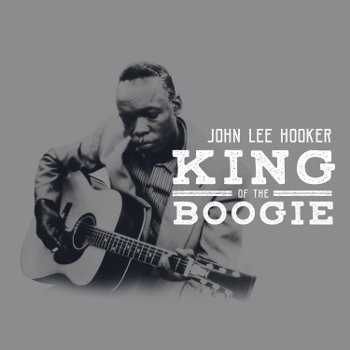 The collection, for example, begins and ends with different versions of Hooker’s earliest hit “Boogie Chillen'”, the first, a crackling recording of just Hooker and his guitar from the September 1948 solo session that launched Hooker’s career and that helps establish the boogie from the set’s very start. Contrast that to the later (as in five decades later) more rocking version, which captures a much older Hooker joined by Eric Clapton, Rick Kirch, and Johnny Lee Schell all on guitar and incorporates some lively keyboards, one of only a few songs on which Hooker begins to show his age vocally. In between, there’s also a live acoustic solo version of the song from 1962, a rather low-key performance with a soft-spoken intro that, along with the other songs included here from that same San Francisco blues club (Sugar Hill) show — the much more traditional, Sonny and Brownie-like than boogeying “Bottle Up and Go” and creeping “Crawlin’ King Snake” (also representing the second version of the song) — helps remind the listener just how smooth Hooker’s voice and playing could be.